
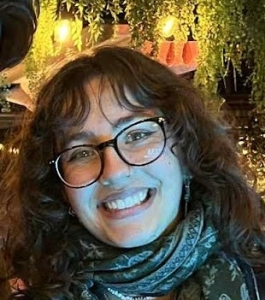
Missy’s Story: What I’ve learnt about my grief
“The way that someone grieves is just as unique as the relationship they had with that person when they were alive.”
About Me
I was first introduced to SeeSaw in 2021, when my mum had just passed away after a brief but aggressive battle with bowel cancer. I was 14 years old.
It was shortly after in 2022 when I was asked if I would like to participate in the Youth Panel being formed for feedback and more specifically the ‘You are not Alone’ short film. SeeSaw has, and will always, hold a special place in my heart because of the amazing they have done for me. Working with SeeSaw helped me process more of my grief as I talked it through with other bereaved young people. Not only this but it made my loss seem like less of a senselessly painful experience, and more of a chance to understand and encourage others in their experiences of grief. So, when I was offered the chance to work with SeeSaw again, as a Young Ambassador, I jumped at the opportunity, with the hope that I could help others the way that SeeSaw helped me.
My Journey With Grief
There is a lot you can learn about yourself when you lose a loved one. When my mum first passed away, something I struggled with was working out how to talk about death and my mum in general. something I struggled with a lot was the realisation that suddenly talking about my mum or my home life could be awkward or sad. Wrapping your head around such an irreversible and substantial loss is hard enough, but then adding to that the alienating feeling of being young and so vastly different to other children your age is incredibly difficult.
Five years on from her death I still find myself awkwardly stumbling around questions about my mum, or even bringing some “inappropriate” humour to the conversation. Something I struggled with a lot initially (and in all honestly, still do at times) is blurting out things like “She’s dead” or “Don’t have a one” in relation to questions about my mum. Sorry to everyone who has been on the receiving end of one of those outbursts, I know there’s a lot of you! It was almost a compulsion to just explode with the cold hard fact, without censoring it first for the sake of the other person. It says a lot about how I was processing (or not processing) the loss of my mum at this point.
In some ways my own inability to process and accept her being gone manifested in these odd interactions. I realised after several years of these jarring conversations that I needed to find a way to talk productively about death and my mum. When I joined the Youth Panel, I started to have deep and meaningful conversations with people my own age, who largely felt similarly to me. I started to process and form my understanding of what losing my mum really meant, and came away from these group discussions multiple times feeling like I had unlocked some new way of truly describing what was going on with my emotions and in my head.
What I’ve Learnt
Hindsight is great, but sometimes it can seem to diminish how hard the journey was at the time. Behind my progress in my grief journey, there are years of struggling and learning to live around my grief, without letting it define me.
Getting from A to B with your grief journey can be an extremely daunting ordeal. I’m sure that not many people stop and think to themselves in the early days of a loss, “Oh well, I’m sure I’ll feel much better about everything in a few years” and even if they did, that wouldn’t be entirely true. There’s no timeline or ‘Stages of grief’ (in my opinion) and in fact being told there is, can just feel like more pressure to reach certain milestones that may be far out of your reach. I often found myself dissociating or feeling emotionally numb, and so being told about how I ‘should be’ feeling or what stage I was ‘supposed’ to be at was deeply unhelpful, and made me feel like I was somehow dealing with it wrong.
My repressed emotions would often take the form of other issues and fixations, such as obsessing about getting good grades and putting pressure on myself to be likeable and helpful in social settings. Handling this simultaneously as an insecure and vulnerable teenager led me to seek validation and affection from others. This was most likely in an attempt to fill an emotional hole and find a replacement for the love I felt I had lost.
Something I’ve found that helped me with this want for love and companionship was realising that I had a lot of support and understanding from the close friends and family I have around me, and that it was okay to lean on them, in whatever form that may take. Especially when things got too heavy for me to carry alone. Seeking to deepen and cherish the relationships I do have helped me accept the loss I have experienced but appreciate the love I still had and the new love I have gained. An important part of learning to manage my grief was accepting that the love I had lost didn’t have to be replaced but could instead be reflecting in my relationships with others.
My Advice
While it’s true that there are no right and wrong ways to grieve, there are certainly things I or the people wanting to support me could’ve done with knowing sooner. For instance the importance of taking precautions. As a young person experiencing the loss of a loved one, there may well be times when your peers simply can’t relate to you and end up seeming insensitive. There have been several times within school and my social life where I wish I had simply walked away from the conversation, preventing myself from feeling left out or alienated and being further reminded of the grief I was experiencing. For me, being 14 and and without a Mum just made me realise how much people my age talk about their Mums, and particularly around Mothers Day. I’m not encouraging the resentment of young people who do have parents and therefore the things they may talk about, but sometimes walking away from conversations you just can’t relate to and topics that may be painful, is the right thing to do. Regardless of social rules and normality.
It can be helpful to remember that most of us are experiencing these things for the first time. Loss and love are both so unique that as much life experience as someone may have, you can’t be prepared for everything. Which leads me to my next point. Be prepared to get things wrong. Be prepared to witness and feel people getting things wrong, and sometimes therefore letting you down. You can be angry and upset at unsolicited advice or poorly delivered comfort, even if it does come from a place of care. The people we love and who love us can still get it wrong, so its often better to be very direct about your needs and feelings, so as to avoid the awkward dilemma of trying to find the right thing to say to a grieving individual.
My advice to those individuals looking out for and caring for bereaved young people, would be to create a safe space for communication of needs and emotions. Grief is in no way solvable. A hard pill to swallow is that there are no magic words or phrases that may be said in a particular order that will stop the pain. This can be especially hard when we just want to be able to make everything better. But just asking young people what they need from you, or creating a channel of communication where they can come to you when they’re ready, is often the kindest and most helpful thing you can do. When you lose someone you love, it’s easy to feel alone, or abandoned, so having people there, reminding you of their support is incredibly stabilising. Often actions and presence mean more than words. The most important piece of advice I would give is communication and observing the needs of the people we love.
Facing My Future With Hope
The beautiful thing about love, relationships and humans in general is that in our variety and diversity, we still find a way to relate and connect. I found that in sharing my unique experience of grief and hearing the experience of others, that I could better understand myself and the space that was left after the loss of my mum. If it wasn’t for the guidance and sense of community that SeeSaw gave me I would have missed out on the opportunity to better understand myself and what love means to me. SeeSaw helped me to understand that just because I had experienced loss, didn’t mean that I was damaged or alone, but that my difficult experiences in life only made me more open to and welcoming of love, which I have certainly found through the amazing people I have met from and through SeeSaw.