• Mother embracing her young daughter

Suicide

When someone in a family dies suddenly, it can be a devastating time for everyone. When someone dies by suicide, families often have additional worries and concerns around how to support children. The priority for most parents or carers is how to get it right for the children.

How to explain death by suicide

Mother with her arm around her son looking out of the window

Talking to children about a death by suicide

When someone has died by suicide, it can feel very hard to talk with children about what has happened. Many adults want to protect children from painful information. However, being open and honest in an age-appropriate way is usually the most helpful approach.

Why honesty matters

Children often become aware that something serious has happened. They may overhear conversations, hear things at school, or see information online or on social media. If they do not hear the truth from a trusted adult, they may learn about the death from someone else or hear things that are inaccurate or upsetting.

When children do not have enough information, they can also fill the gaps with their imagination, sometimes worrying that they caused the death or could have prevented it. Clear explanations can help reduce confusion and anxiety.

Mother talking to her teenage son on the bed
Girl talking to her mum on the sofa

How to talk with children

  • Choose a quiet, private place where you will not be interrupted.
  • Use clear language, such as saying the person has died, rather than words like “lost” or “passed away”, which can be confusing.
  • Give information a little at a time so children can take it in and ask questions when they are ready.
  • Be guided by your child’s age and level of understanding. Younger children may need simple explanations and repetition.
  • Reassure children that nothing they said or did caused the death.
  • Let them know they can come back with questions at any time.

If you have already given a different explanation, it is ok to revisit the conversation and explain more when you feel ready.

Helping children feel supported

Children will respond in different ways. Some may cry or want to stay close, while others may seem quiet, angry, or behave as if nothing has happened. All of these reactions can be normal.

It can also help children to know what will happen next, such as plans for school, the funeral, or who will be caring for them.

Above all, children need to know that they are loved, safe, and supported. It is also okay for them to see that adults feel sad too.

If you would like advice about supporting your child after a death, SeeSaw can offer guidance and support to families.

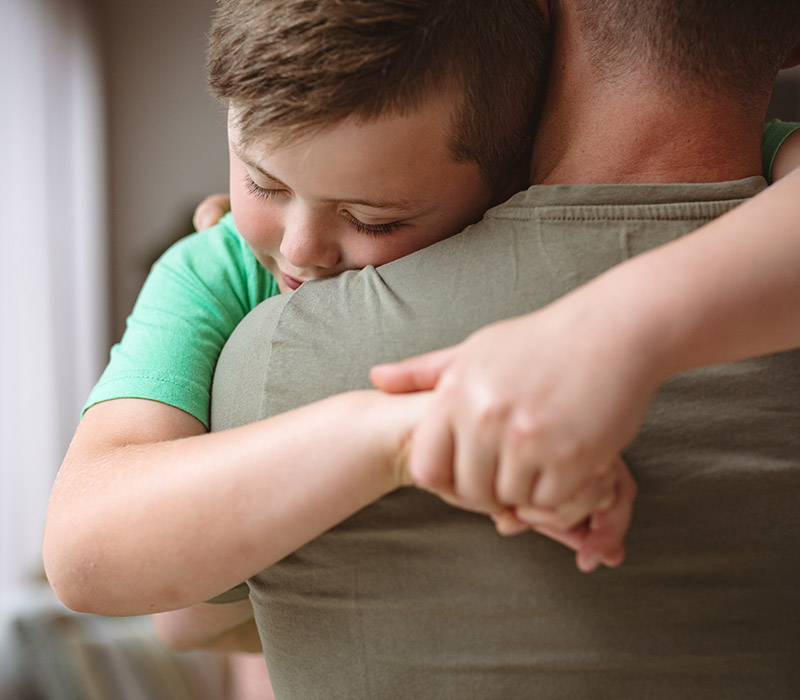
Young boy hugging his dad

What to say and when

Explaining that someone has died by suicide can feel overwhelming. It helps to break the information into stages and gradually work through each stage. It’s important to note that depending on the age of a child or the circumstances, these stages may happen within the space of minutes / hours or over a longer period of time.

This is the stage when you explain gently and simply that someone has died. It is helpful to do this somewhere the child feels comfortable and safe. Older children may need space to themselves afterwards, so being close to a place they can go to on their own, such as their bedroom, is useful.

It is important to avoid euphemisms such as ‘gone to sleep’ ‘gone to the sky’ as this can cause confusion. Although it might feel uncomfortable, it is important to use the words died and dead.

Try to give them a simple, short, honest sentence:

‘I have something really sad to tell you. Mum died today.’

The second step provides a little bit more information by giving an explanation about how or where the person died. This allows you to be honest without giving details you may feel are not appropriate. Giving these simple details allows the child to place the death within a context in their head which can be added to as time goes on. When children are not given honest information, they tend to fill in those gaps with their imaginations, which can result in confusion and complications later.

Here are some examples:

‘Mummy died up on the hill by the trees.’

‘Grandad died in the car.’

‘Daddy died because he took more of his tablets than he should have.’

‘Alisha died by the railway line.’

‘Hassan died because he got very badly burnt.’

The next stage is to explain that it was the person’s choice to take their own life. This can be a very difficult thing to explain to a child, but our experience shows that being given this truth in a child- appropriate way is important and prevents them from discovering this information from someone or somewhere else.

You can start by asking to give them some more information,

‘I would like to give you a bit more information about how Daddy died.’

Then you can explain that sometimes people choose to end their life,

‘There are lots of reasons that people can die, most people don’t die until they get very old, but sometimes people die from illnesses or accidents. Sometimes people choose to hurt themselves and they die. This is what Mummy did’

After your conversation, you might want to ask the child again if they want any more information, which might be a good opportunity to introduce the word ‘suicide’. They are likely to come across this word at some point and if they hear it being used to describe what happened to their loved one, without knowing what it means, it can cause confusion.

‘When people do something like this, they are often very sad and confused and think it is the best thing to do. It is called ‘suicide’ or ‘ending your own life’.

The next step is to give more detail about the method of suicide. This is often the part most people worry about and want to protect children from. This understandably feels counterintuitive and uncomfortable, however if the information is given in a simple, gentle, honest and age appropriate way it often helps children fill in gaps in their story of what happened. When these gaps are missing children are likely to fill them with their own imagined thoughts which can cause more distress.

Here are some examples you could use for different methods of suicide.

Suicide by hanging

‘Do you remember how we say to never put anything around your neck because it’s dangerous? Well Daddy went to a quiet place in a field and took some rope with him. He tied one end of the rope around his neck and the other end to the tree. He climbed up the tree and then jumped off. When he jumped the rope pulled very tight and it stopped him from being able to breathe. This is how he died’

Suicide by overdose

‘When the doctor gives us medicine to take it is to make us feel better, but if you take more medicine than the doctor has told you it can make you very poorly. Mummy took too many tablets at one time. When you take too many tablets it makes your body very poorly and is too hard for your body to stay alive and you die. This is how Mummy died.’

Suicide by overdose and alcohol

The above explanation can be adapted as in:-

‘……Mummy took too many tablets at the same time and then she drank a lot of wine. When you take too many tablets and drink lots of alcohol together, it is hard for your body to stay alive………’

Suicide by jumping in front of a train

‘David walked down to the railway line and he stepped in front of the train when it was coming towards him. The train was very fast, and it did not have time to stop. It hit David. His body was very badly hurt, and he died straight away’

Suicide by carbon monoxide poisoning

‘Ishmael parked his car where no one would notice. He put a tube in the exhaust pipe that comes out of the back of the car. He put the other end of the tub inside the car. When a car’s engine is running it makes fumes come out of the exhaust. Ishmael sat inside the car and turned the engine on. This meant that all of the fumes came into the car and there was not enough Oxygen, which is what we need to breath. These fumes are poisonous and if you breathe a lot of them in you die. It is not painful, Ishmael would have become sleepy and eventually died because his body couldn’t live without Oxygen.’

Suicide by jumping

‘Jane went to the top of the building which is very high up and she jumped off. It was so high up that the fall hurt her very badly. When your body has been hurt that much you die and that’s how Jane died.’

Suicide by burning

‘Josh took a can of petrol and poured it all over himself. He then lit a match and set the petrol on fire. The petrol burnt him very badly and he died. The doctors have said that Josh died very quickly, and although it would have hurt, it would have only hurt for a short time before he died.’

Other situations

There are other ways people die by suicide and these can be adapted from the suggestions given here.

It is important to try and balance the information you give with some reassuring and comforting words, such as

‘Daddy loved you very much and nothing you did or didn’t do made him do this’

‘Mummy didn’t want to hurt you, she loved you very much’

It is important to check what the child has understood after one of these explanations. They should feel informed without feeling too frightened.


One of the hardest things about death by suicide is that there will always be unanswered questions. No-one can every fully know the reasons someone chose to end their life. It is important though, that children know that nothing they said/did/ could have said/done made it happen.

The suggestions below could be adapted to help you give some explanation of why someone took their own life,

‘Sometimes people can feel so sad that they believe things that are not true. Sometimes they might believe that the people around them would be happier if they were not here anymore. This isn’t true, but it’s what they believed and so they decided to stop living. This might be what happened with Daddy’

‘Sometimes people can have an illness in their brain that makes them feel very sad and confused. Doctors can give medicines to help this, but Mummy didn’t go to the doctors. When people feel this way, they can think that the only way to stop feeling so bad is to stop living. This might be why Mummy decided she wanted to die.’

‘People often have problems in their life, but sometimes these problems can build up and feel like they are too much and that there is no way to escape them. Sometimes, instead of asking for help people can feel that the only way they can get away from the problems is to end their life. This might be why Janie decided to end his life’

‘We don’t understand why Jack decided he wanted to die. Sometimes someone can seem very happy on the outside but be feeling different thing inside. Unfortunately, sometimes people feel that they can’t talk to people about the feelings they have and instead these feelings can become too big and they might feel the only way to stop these feelings is to die. We will never know exactly what Jack was thinking, but we do know that he loved us, and he didn’t want to upset us.’

Father typing on laptop next to his young son

Request support

Request support from SeeSaw when someone has died by suicide.

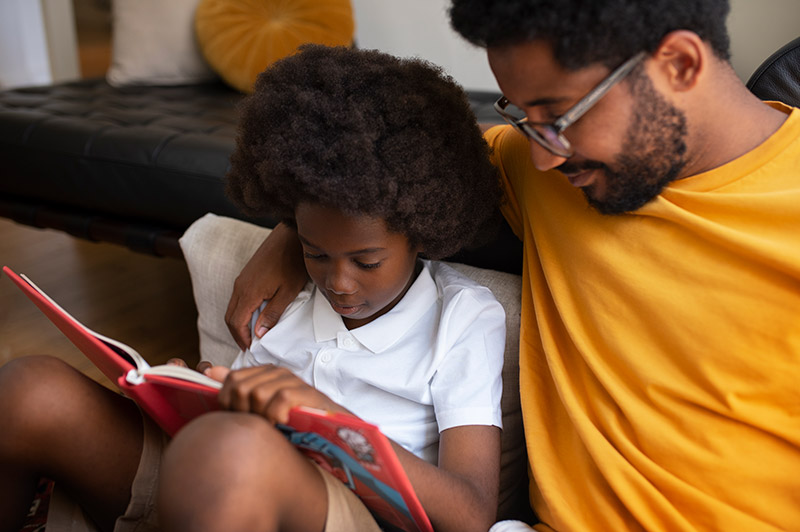
Young boy reading a book sitting next to his dad

Resources

Books and other resources to support children when someone has died.

Family group photo

Stories from families

Read stories from families supported by Seesaw Grief Support.