
• Teenage boy sat thinking outside

Homicide

Breaking this news can understandably feel very difficult and it is natural for adults to want to protect children from the truth. However, with the right support, children are often able to cope with the truth of what has happened very well. In cases where there is likely to be a lot of attention on the death, it is easy for children to overhear what happened from other people which can cause difficulties if this does not match up with what they have been told by a trusted adult.

It can be helpful to break the news in small sections. For some children you may cover all of these sections in one go, for others it may be more spread out. We have set these out below.
Explaining death by homicide

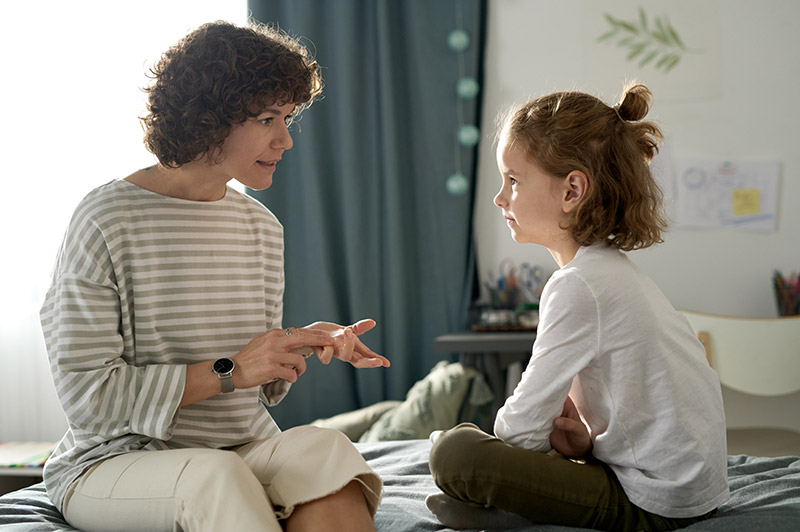
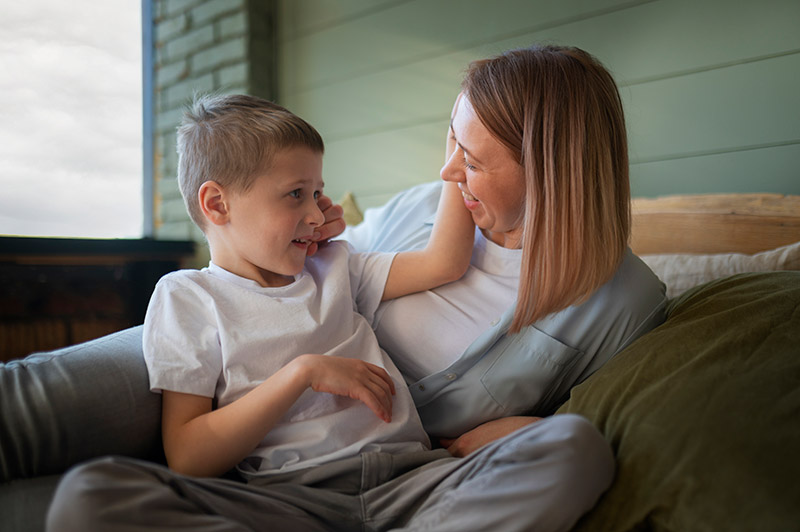
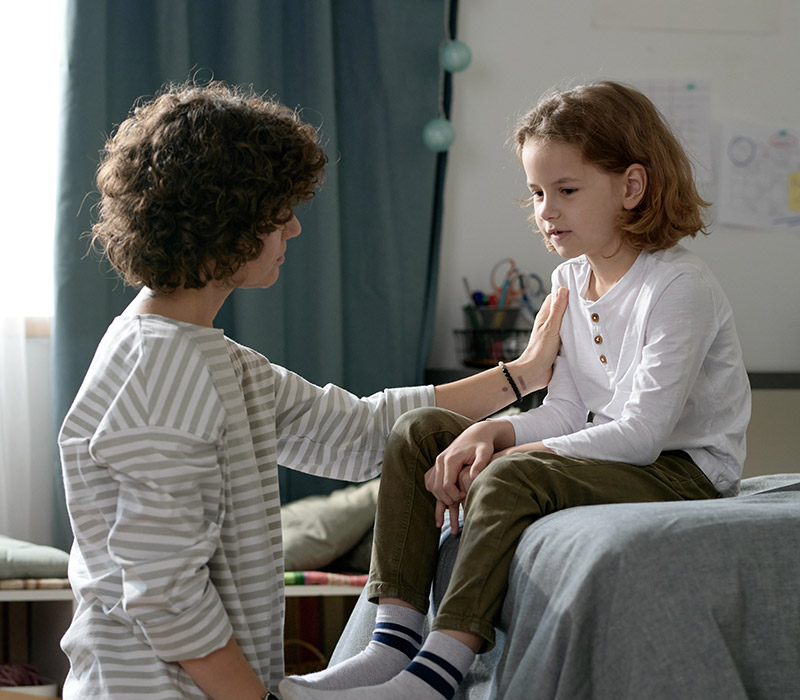
A mother talking to her child sitting on their bed

Explaining that someone has died

If possible, tell a child that someone has died in a place where they feel safe and comfortable. Older children and young people may also benefit from having a quiet space nearby where they can go afterwards if they need some time alone.

Start with clear, simple language that explains the person has died. You do not need to share lots of detail straight away. For example:

“I have some very sad news. Mummy died last night.”

If you think a child may already have heard information from others, it can help to ask them what they understand has happened so you can gently correct any misunderstandings.

Giving simple details

Children and young people often need simple factual information to help them make sense of what has happened. Honest, age-appropriate details can help them begin to process the news and reduce the likelihood of them imagining something more frightening.

For example:

“Daddy died outside the train station.”

“Jane died near the youth centre.”

Father sat on the grass holding and talking to his young son
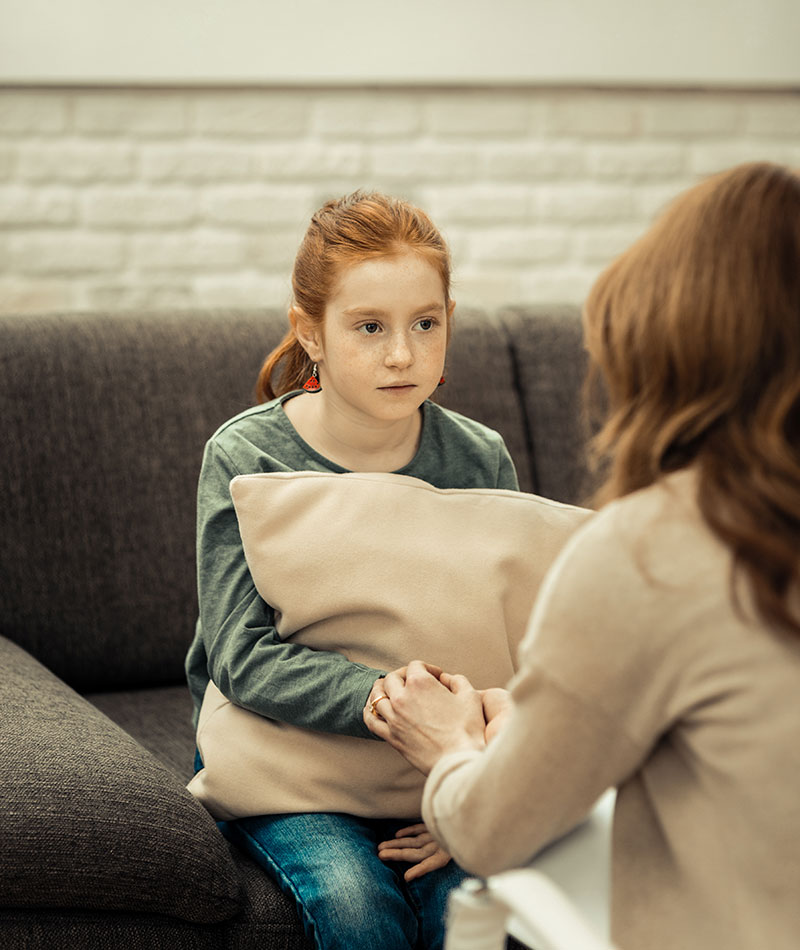
Mother talking to her daughter holding a pillow sitting on the sofa

Explaining how someone died

Being honest about how someone died can help children and young people understand what has happened and build trust in the adults around them. However, it is important to use language that is appropriate to their age and level of understanding.

For younger children, simpler and less graphic words are often easier to process. For example, using words such as “hurt” and “died” may feel less frightening than more detailed or emotive language. Reassurance can also help children feel safer.

For example:

“Somebody hurt Mummy very badly. The doctors tried to help her, but her body was too badly hurt and she died.”

“Carl was hurt with a knife and his injuries were so serious that he died. The police are working hard to find out what happened, and we are safe here.”

It can help to avoid describing the person responsible as “evil” or “bad”, as this may increase a child’s fears. Instead, explain that someone made very harmful choices or did something very wrong.

Checking understanding

Children understand death differently depending on their age and stage of development. Younger children may need information repeated many times as they gradually make sense of what has happened. Repeating the same questions is a normal part of processing grief and shock.

After sharing information, it can help to gently check what a child has understood and give them opportunities to ask questions. Honest, simple and repeated explanations can help children feel more secure and supported over time.

Teenage boy looking serious
Father talking to his teenage son

Answering questions

At each stage of the conversation, give children and young people opportunities to ask questions. Their questions can help you understand what they are ready to hear and what information they need.

Try to answer honestly, using simple language that is appropriate for their age and understanding. It is important to give truthful information without overwhelming them with unnecessary detail.

Children and young people may sometimes ask questions that you cannot answer, or questions you do not feel ready to respond to straight away. It is okay to say that you do not know, or that you need some time before talking about it. If you plan to come back to a question later, try to explain when you will talk together again so the child feels heard and reassured that their question has not been ignored.

Common thoughts and feelings

  • Numbness, shock and disbelief

    By its very nature, death by murder or manslaughter is unexpected and may be violent. Any death that comes as a shock can take a long time to be fully processed and accepted as reality. This can be particularly difficult for children who may not know the details of the death. However, the feeling of numbness at the beginning can often protect from feelings which may seem overpowering and may in fact help in the early days when there is a lot to cope with.

  • Guilt

    It is common after someone has died by murder or manslaughter for family and friends to question whether there was something they could have said or done that might have prevented the death from happening. For example, some might think that if they had insisted on their loved one staying in with them instead of going out, it may have been avoided. This can lead to feelings of guilt which can add to the already immensely painful feelings of grief.

  • Fear

    When someone has died by murder or manslaughter it can inevitably make the world seem a much scarier place for their loved ones. This fear can lead to people not wanting to leave the house or do normal activities. This can be particularly difficult in cases where the perpetrator has not yet been found.

  • Blame and vengeance

    With any death, it can be common to experience the need to blame someone or something. In cases where someone has died by murder or manslaughter there will be a particular person(s), or institution, who will be held responsible for the death, and therefore the feelings of blame may be intensified. In such cases, blame can lead to feelings and expressions of vengeance, where the bereaved family or friends wish ill on the perpetrator as a way of finding justice for the deceased.

Additional factors following homicide

  • Media attention

    It is likely that a death of this kind will be picked up by local or national press. It is also likely that it may be shared across social media platforms, resulting in additional comments from strangers. This type of attention can be very intrusive, particularly if the press are keen to speak with friends and relatives. Children may find it particularly hard to deal with this kind of intrusion if staff and pupils at their school are talking about what happened.

  • Police investigation

    As with any crime, there will be an investigation into what happened. Although this is an important necessity in finding answers, the process of an investigation may be a lengthy one and the pressure of dealing with the various elements can bring additional stress and potentially delay or complicate grieving. It can also be challenging for families as they try to protect children from the details of these proceedings.

  • When the perpetrator is known

    If the perpetrator is a family member this can cause a range of mixed and conflicting emotions. For children who may have had a close relationship with the perpetrator they will be dealing with the confusion of having love for the person, mixed with the negative feelings about what they have done. For very young children who may not fully understand what has happened, they may continue to ask to see the perpetrator or say they miss them, if they were a significant part of their life.

    Where a parent has been killed by the other parent, on top of the emotional confusion there will be the additional complications of who now looks after the children as neither parent will now be present.

What can help

A mother with a hand on the shoulder of her teenage daughter

Reassurance

After a death caused by murder or manslaughter, the world can feel frightening and unsafe for children and young people. They may need repeated reassurance that they are safe, loved and cared for. It is also important to remind them that nothing they did caused or could have prevented what happened.

Where possible, try to balance difficult or upsetting news with examples of kindness, care and safety in the world around them.

Explain key information

Following this type of death, families may have contact with a range of professionals. Children and young people can feel less anxious if they understand who these people are and why they are involved.

Use simple, honest language to explain what is happening and prepare children in advance if someone may need to speak with them. This can help them feel more informed, prepared and in control.

A mother talking to her child sitting on their bed
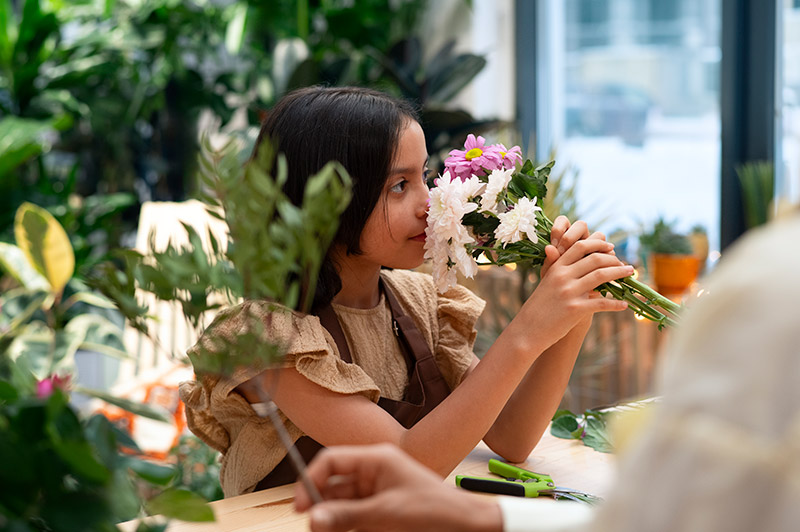
Young girl smelling flowers

Give children choices

A death through murder or manslaughter can leave children feeling powerless and out of control. Offering small choices and involving them in decisions can help restore a sense of safety and control.

This might include helping choose flowers or music for a funeral, deciding whether they would like to say or write something, or making simple everyday choices such as what to eat or what activity to do. Too many choices can feel overwhelming, so offering a few clear options can help.

Encourage and normalise feelings

Children and young people are likely to experience a wide range of emotions after a bereavement, and these feelings can sometimes feel unexpected or overwhelming. Reassure them that all feelings are valid and that grief can look and feel different for everyone.

It can help to explore different ways for children to express their emotions, such as creative activities, journalling, sensory play or using tools like feelings charts and emotion wheels.

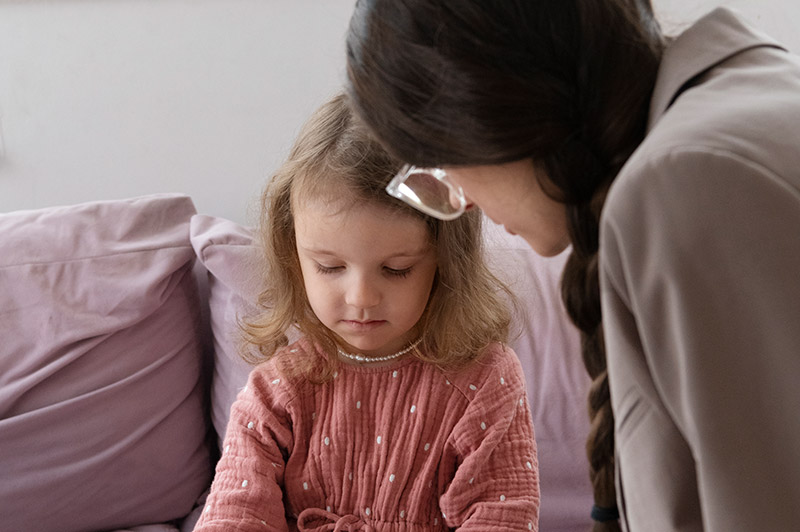
Mother talking to their young daughter
Young boy smiling with mother

Encourage normality and fun

Children often move in and out of grief quickly. One moment they may feel sad, and the next they may want to play, laugh or spend time with friends. This is a healthy and natural part of childhood grief.

Continuing with routines, activities and opportunities for fun can help children feel safe and supported. Older children and young people may sometimes feel guilty for enjoying themselves, so it can help to reassure them that having fun does not mean they have forgotten the person who died.

Model open and honest grief

Children learn how to respond to difficult situations by watching the adults around them. It is okay for children to see sadness and grief, as this helps them understand that emotions can be shared safely and openly.

When showing emotion, it can help to explain it clearly and offer reassurance. For example: “I am crying because I miss Daddy and feel sad. It is not because of anything you have done.”

Creating space for honest conversations about feelings can help children and young people feel more able to share their own emotions and ask for support when they need it.

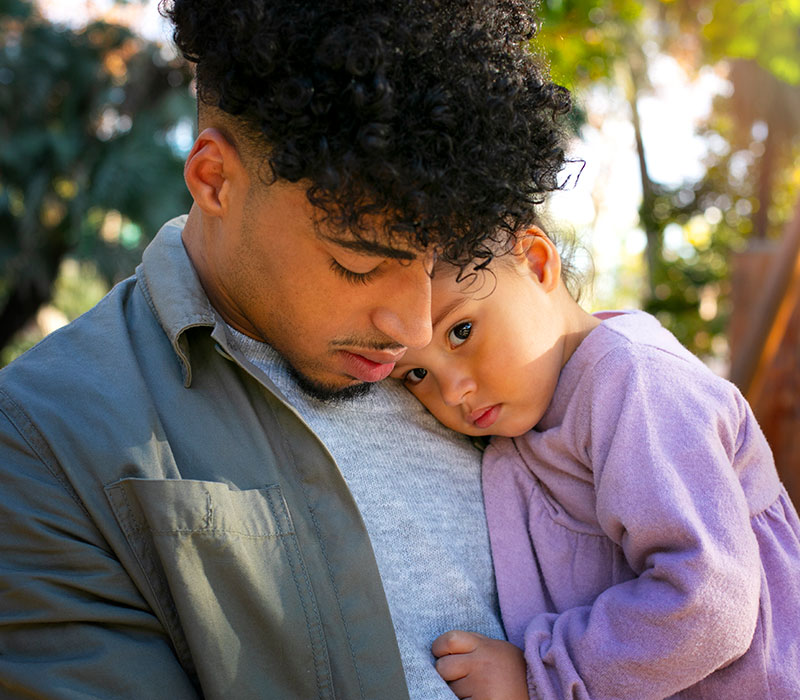
Father cuddling his young daughter
Father typing on laptop next to his young son

Request support

Request support from SeeSaw when someone has died by homicide.

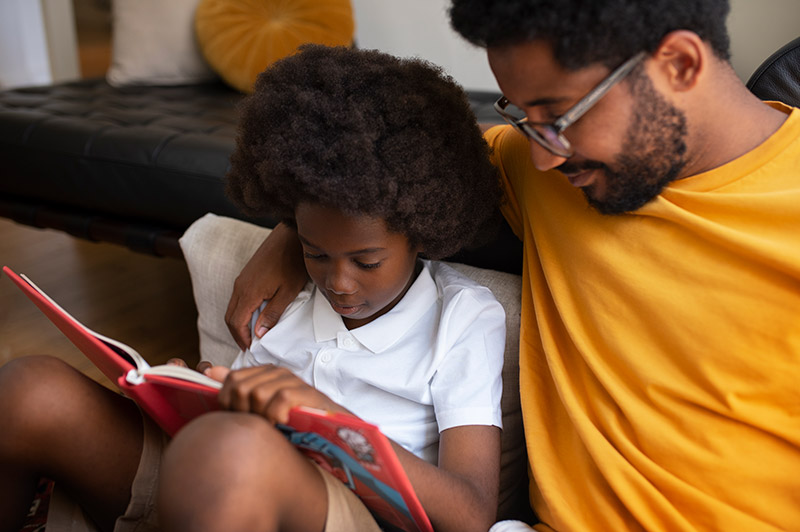
Young boy reading a book sitting next to his dad

Resources

Books and other resources to support children when someone has died.

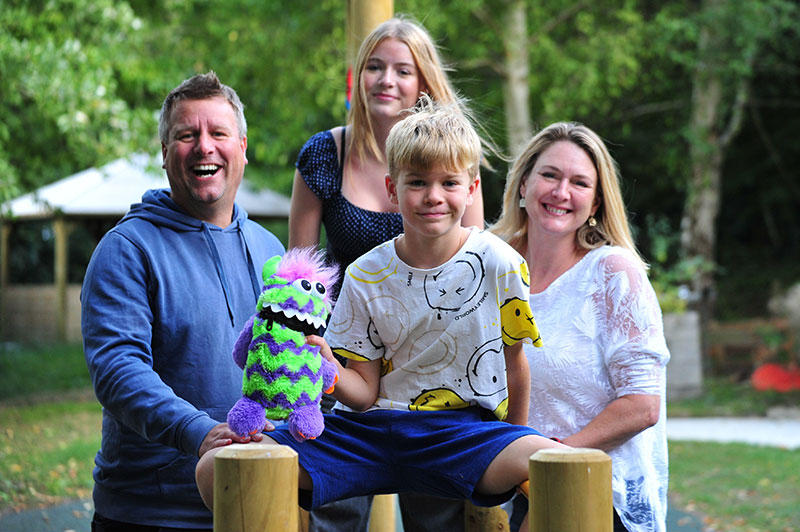
Family group photo

Stories from families

Read stories from families supported by Seesaw Grief Support.